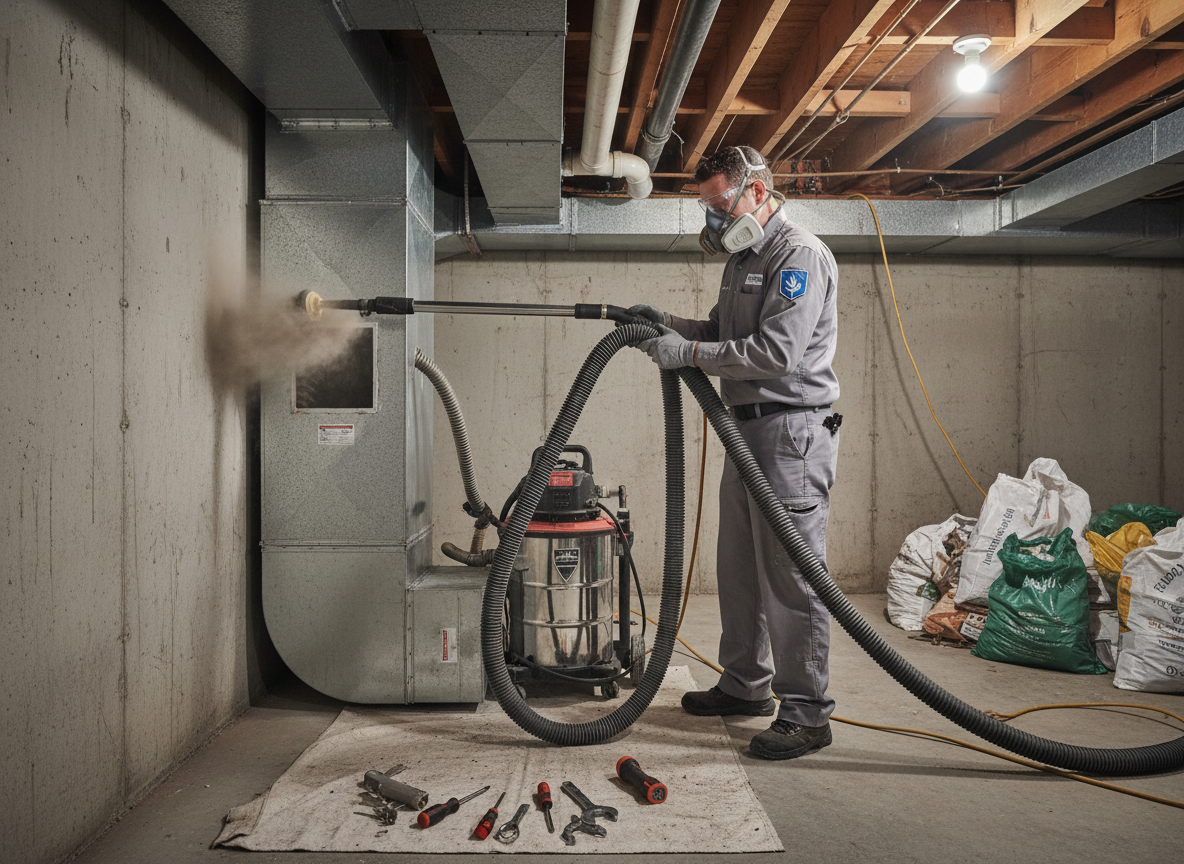
Parsippany-Troy Hills homes built from the 1950s through the 1980s often rely on forced-air systems with duct runs that trap pollen from nearby wooded areas and fine road dust from Route 46 and I-80 corridors. During the extended winter heating cycle, these particles recirculate daily, aggravating allergy symptoms for residents. Cleaning focuses on removing buildup at registers, trunk lines, and returns where standard vacuuming never reaches, using negative-pressure equipment to prevent cross-contamination into living spaces.
Moisture from humid summers can combine with winter heating to create conditions for mold growth inside metal ducts, especially in basements near the Rockaway River floodplain. Technicians inspect for loose insulation, gaps at joints, and debris that standard filters miss. Proper cleaning restores airflow without disturbing asbestos-wrapped pipes common in mid-century construction, which requires careful containment methods.
Homeowners frequently notice reduced sneezing and clearer breathing within days after service, particularly in neighborhoods like Lake Hiawatha and Mount Tabor where tree pollen loads are heavy. The work also addresses pet dander that settles in low-velocity sections of the ductwork near floor returns. Each job accounts for the specific layout of split-level and ranch homes prevalent in the township.
Access panels are cut only where needed and sealed afterward to maintain system integrity. Technicians check that the furnace blower and evaporator coil are free of debris before finishing, preventing immediate re-soiling of freshly cleaned ducts.
Technician insight
In Parsippany-Troy Hills the thing that catches most people out with air duct cleaning for allergies is the amount of fine road salt dust that gets pulled into return ducts during winter plowing season. Homes near major roads accumulate it faster than people expect, and it stays suspended long after the snow melts.
Lake Hiawatha Split-Level Allergy Relief
A family in a 1970s split-level near Lake Hiawatha reported persistent spring congestion. Inspection revealed thick layers of pollen mixed with winter heating dust in the main trunk line. Negative-pressure cleaning removed the buildup and restored proper airflow through the returns. Symptoms eased noticeably once the system was back in use.
How it works
- 1
Initial Inspection
Technician examines all accessible ducts, registers, and returns to identify heavy pollen and dust accumulation typical in Parsippany-Troy Hills homes.
- 2
System Isolation
Registers are sealed and negative pressure is established to contain debris during cleaning.
- 3
Agitation and Extraction
Rotary brushes and compressed air dislodge material from trunk lines and branches while the vacuum removes it from the system.
- 4
Final Verification
Post-cleaning inspection confirms airflow improvement and checks that no debris remains in the furnace or returns.
Pricing
Cost depends on number of runs, home size, and whether mold or heavy debris is present.