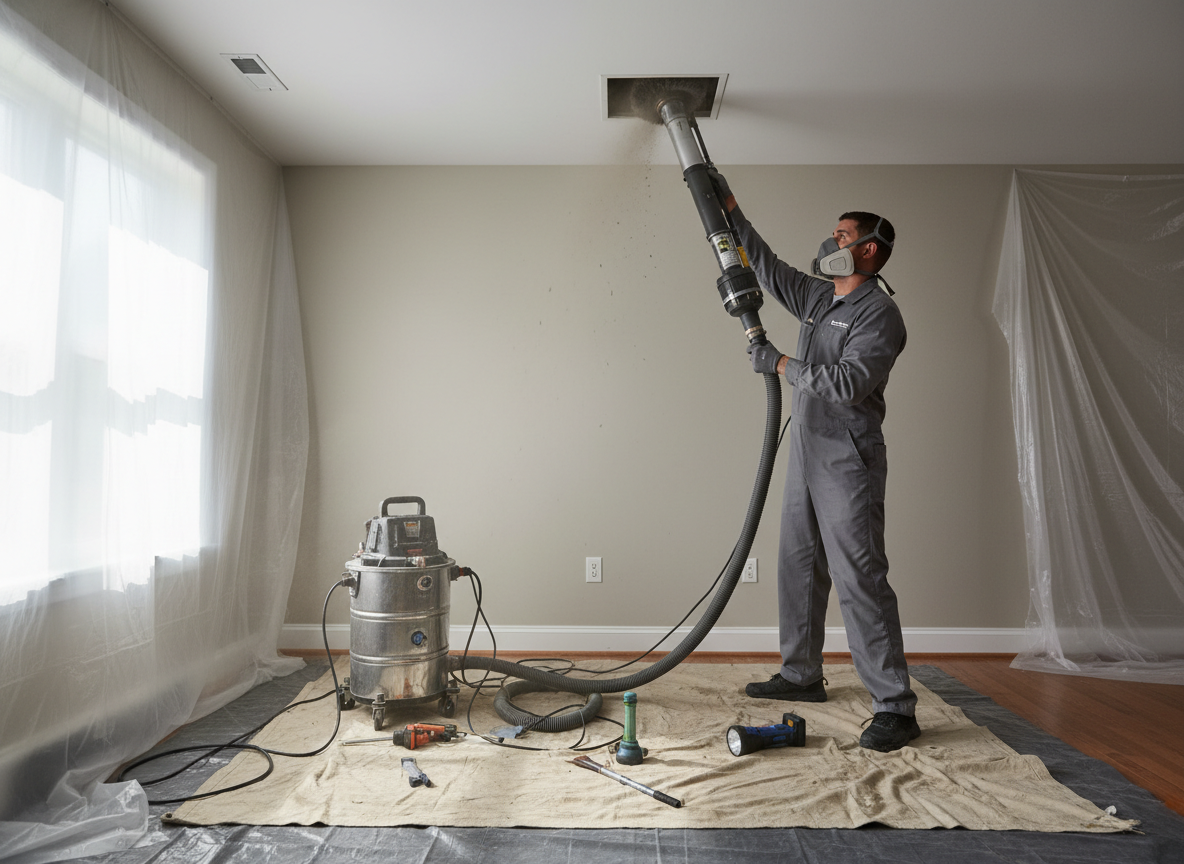
Parsippany-Troy Hills features many homes from the 1950s through 1970s with metal and flexible duct runs that trap pollen and fine dust during humid summers and cold winters. These systems often route through attics or crawl spaces where temperature swings cause condensation. A 24/7 air duct cleaning crew must use negative-air machines and rotating brushes sized for both rigid and flex lines to avoid tearing older seams common in Lake Hiawatha and Mount Tabor properties.
Heavy seasonal pollen from surrounding wooded areas combines with winter heating cycles to create thick buildup on coil surfaces and register boots. Technicians working overnight calls frequently encounter pet dander lodged in branch lines that standard vacuuming misses. Proper cleaning requires removing and washing registers separately while sealing the main trunk to prevent redistribution into living spaces during the job.
Homeowners in the Parsippany-Troy Hills area sometimes notice musty smells after heavy rain because moisture enters poorly sealed return ducts near foundation level. A 24/7 response allows crews to address these issues before mold colonies spread through the HVAC system. The work includes post-clean verification with a camera to confirm all sections are clear rather than relying on visual inspection alone.
Technician insight
In Parsippany-Troy Hills, the thing that catches most people out with 24/7 Air Duct Cleaning is the older ranch homes around Lake Hiawatha where flexible ducts run low near crawl spaces that collect summer humidity, so a quick overnight call often turns into extra time sealing moisture-damaged seams before the brushes can even start.
Mount Tabor Odor Call
Homeowner in Mount Tabor reported musty air after a summer storm. Inspection showed debris and moisture in low return lines typical of 1960s homes. Crew performed full negative-air cleaning overnight and confirmed clear ducts with camera. Odor disappeared and airflow returned to normal.
How it works
- 1
Initial Assessment
Technician arrives and inspects accessible duct sections, registers, and the HVAC unit to identify blockages or moisture without disturbing the system.
- 2
System Isolation
Registers are removed and sealed, then the main trunk is connected to negative-air equipment to contain debris during cleaning.
- 3
Mechanical Cleaning
Rotating brushes and compressed air clear each branch line and the trunk while the vacuum collects loosened material outside the home.
- 4
Final Verification
A camera inspection confirms cleared sections, registers are reinstalled, and the system is tested for normal airflow.
Pricing
Pricing varies by home size, number of runs, and access conditions; upfront quote provided before work begins.