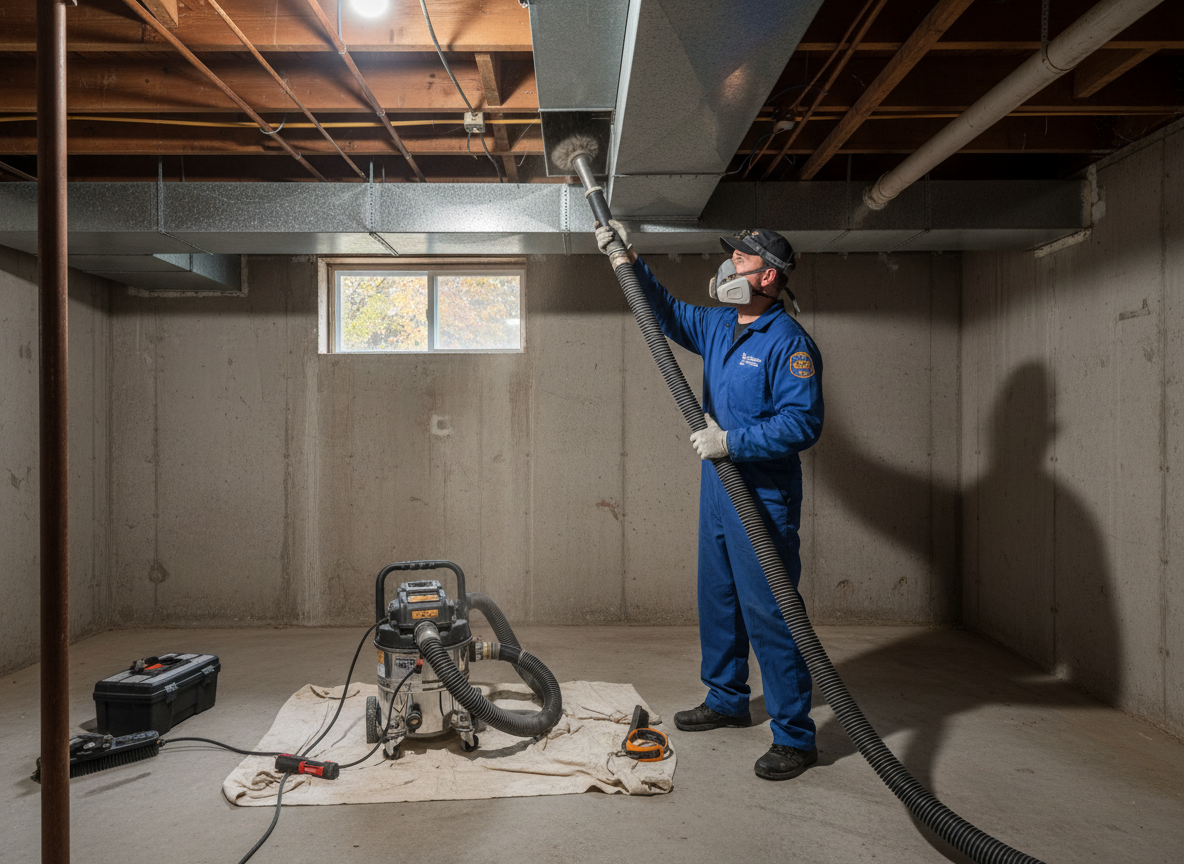
Parsippany-Troy Hills homes built from the 1950s through the 1970s often feature galvanized steel duct runs that run through unconditioned attics and crawl spaces. These ducts collect pollen, insulation fibers, and construction dust that circulates during the long heating season. When winter temperatures drop below freezing, the metal contracts and loosens joints, allowing more debris to escape into living spaces. Cleaning crews must access these runs through existing registers and carefully seal openings afterward to prevent attic air from being pulled into the system.
Summer humidity in Morris County encourages mold growth on any cellulose debris inside the ducts, especially where supply lines pass near bathroom exhausts. Technicians use negative-air machines with HEPA filtration to capture particles without redistributing them through the house. In split-level homes common along Route 46, multiple trunk lines meet at the air handler, requiring separate access points and staged cleaning so the blower does not push loosened material into finished rooms.
Newer subdivisions near Lake Parsippany and the Rockaway River have flex duct sections that can tear during aggressive brushing. Experienced crews inspect these lines with cameras first and switch to soft-bristle tools or compressed air only. Homeowners in the area frequently report improved airflow and reduced dust on surfaces after a full-system cleaning that includes the return plenum and blower compartment.
Technician insight
In Parsippany-Troy Hills, the thing that catches most people out with Residential Air Duct Cleaning is the number of 1960s split-level homes where the main trunk sits in a low crawl space that floods lightly each spring; once moisture reaches the duct seams, the usual brush-and-vacuum approach spreads wet debris instead of removing it, so we always camera the lowest runs first.
Split-Level Home Near Lake Parsippany
Homeowner noticed heavy dust on furniture shortly after turning on heat. Inspection found collapsed flex duct in the crawl space allowing insulation fibers into the system. Crew isolated the damaged section, replaced the flex run, and completed negative-air cleaning of the remaining steel ducts. Airflow improved and dust complaints stopped.
How it works
- 1
Initial System Inspection
Technicians examine registers, returns, and the air handler in the home to map duct routes and note any damaged sections or moisture issues.
- 2
Negative Air Setup
A HEPA-filtered vacuum is connected to the main trunk to create containment while brushes and compressed air agitate debris inside the lines.
- 3
Agitation and Extraction
Rotary brushes and air whips loosen dust and debris throughout supply and return runs; the negative-air machine pulls material out of the system.
- 4
Component Cleaning
Blower housing, evaporator coil, and return plenum are vacuumed and wiped to remove buildup that would otherwise re-enter the cleaned ducts.
- 5
Final Verification
Registers are reinstalled, airflow is checked at multiple points, and the homeowner receives a walkthrough of before-and-after conditions.
Pricing
Cost depends on number of runs, access difficulty, and whether flex duct sections require extra care; 24/7 scheduling available.