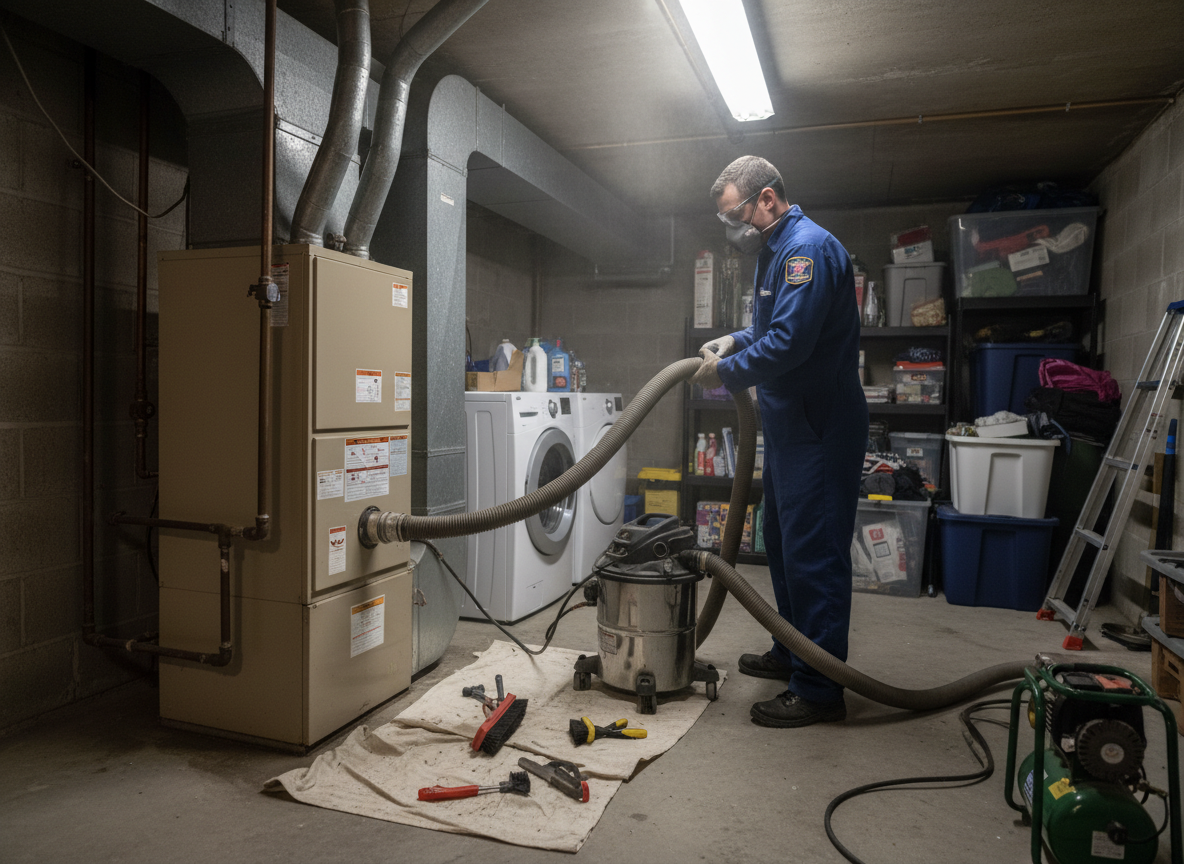
Furnace and duct cleaning in Parsippany-Troy Hills targets the buildup that occurs in forced-air systems common throughout Morris County homes. Many properties here feature ductwork installed decades ago that collects construction dust, insulation fibers, and seasonal pollen brought in through open windows during warmer months. When winter arrives and furnaces cycle more often, that material gets pushed into living spaces. Technicians remove access panels, use negative-air machines to contain debris, and brush each run before vacuuming to the exterior.
Homes near 113 Parsippany Rd often sit on level lots with basements or crawl spaces that keep return ducts close to the ground. This placement lets moisture from occasional heavy rain or snowmelt reach metal seams, leading to surface corrosion that traps more lint. Cleaning crews inspect for these conditions first, then decide whether to add antimicrobial treatment or simply focus on mechanical removal. Skipping the inspection step leaves residue that quickly reaccumulates once the furnace restarts.
Access points in older Parsippany-Troy Hills houses are frequently limited to a single return grille or a small furnace cabinet opening. Crews create additional entry points only where drywall can be restored cleanly, then seal every joint after the work. This approach prevents the negative pressure from pulling unfiltered air through wall cavities during the job. Homeowners notice quieter operation and fewer dust streaks on registers within days of service.
Scheduling during shoulder seasons avoids the peak demand that hits when temperatures first drop below freezing. Systems left untouched for several years require longer setup time because multiple trunk lines may need section-by-section brushing. The 24/7 availability from the Parsippany address allows same-day response when a furnace fails during a cold snap and the homeowner needs the ducts cleared before a new unit is installed.
Technician insight
In Parsippany-Troy Hills, the thing that catches most people out with furnace and duct cleaning is the way older split-level homes on slight slopes collect moisture in the lower return ducts during spring thaw. That damp lint turns into a thick mat that standard brushes slide over unless the tech stops to break it up by hand first.
Basement Return Blockage
A homeowner near Parsippany Rd reported weak heat on the second floor. Inspection showed the main return in the basement half-buried in construction debris from a prior renovation. Crews opened an additional access point, removed the packed material, and restored full airflow without disturbing finished walls.
How it works
- 1
Initial Inspection
Technician examines furnace, return and supply runs, and access points in the Parsippany-Troy Hills home to map the system layout.
- 2
Containment Setup
Negative-air machine connects to the main trunk and registers are sealed to keep debris from entering living areas.
- 3
Mechanical Cleaning
Rotating brushes and compressed air dislodge material from duct walls and furnace heat exchanger surfaces.
- 4
Debris Removal and Final Check
All loosened material is vacuumed to the exterior; registers and panels are reinstalled and airflow is verified.
Pricing
Cost depends on number of runs, furnace location, and whether additional access points are required.