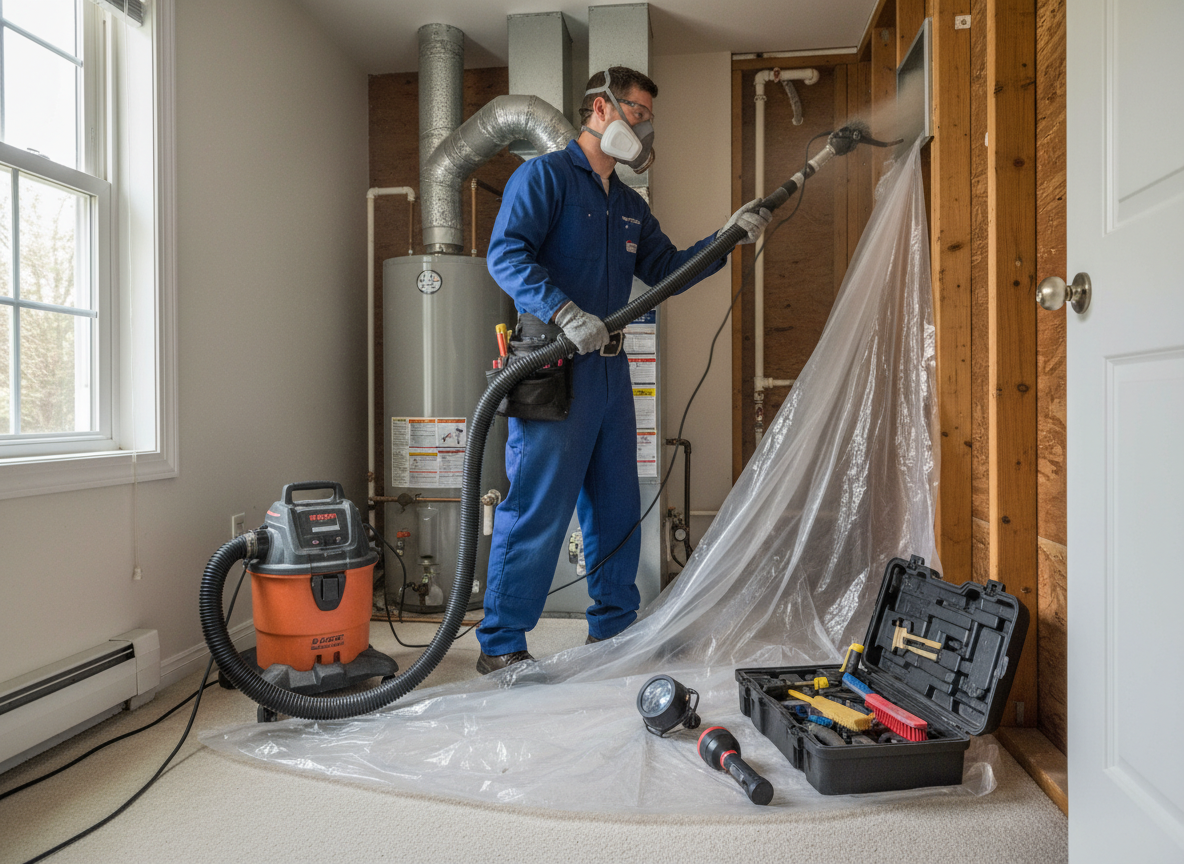
Parsippany-Troy Hills features many mid-century ranch and split-level homes with long, narrow duct runs that trap pollen, construction dust from nearby Route 46 projects, and pet dander. These systems often run through unconditioned attics where summer humidity promotes mold growth on metal seams. Cleaning requires brushes sized for 4- to 6-inch branch lines plus negative-air machines to prevent debris from re-entering living spaces. Skipping the return-side vents leaves the blower motor pulling the same contaminants right back into the house.
Morris County winters bring rapid temperature swings that cause duct joints to expand and contract, loosening accumulated lint at every elbow. In neighborhoods like Lake Hiawatha and Lake Parsippany, many homes still have original flex duct from the 1970s that collapses under vacuum if not supported during cleaning. Technicians must map each run before starting because blocked branches near the furnace create hot spots that raise energy bills even after the main trunk is cleared.
Air vent cleaning here also addresses the fine silica dust that blows in from nearby quarries and settles in low-velocity sections of the ductwork. Homeowners often notice the difference first in second-floor bedrooms where registers have never been removed for inspection. Proper service includes brushing every accessible vent, vacuuming the plenum, and wiping register faces so the system does not simply redistribute loosened material on the next cycle.
Technician insight
In Parsippany-Troy Hills, the thing that catches most people out with air vent cleaning is the amount of oak pollen and silica dust that packs into the long attic runs of 1960s-1970s ranches. Homeowners vacuum registers for years without realizing the flex duct has partially collapsed, so standard shop-vac attachments never reach the real blockage.
Collapsed Flex in Lake Hiawatha Ranch
A homeowner in the Lake Hiawatha section reported weak airflow on the second floor. Inspection showed original flex duct sagging across attic joists and packed with decades of fine quarry dust. Brushing from the furnace end while supporting each run restored full velocity; the family noticed cooler upstairs rooms within hours.
How it works
- 1
Initial Inspection
Map every supply and return run from the furnace in Parsippany-Troy Hills homes, noting collapsed flex, loose joints, and moisture stains.
- 2
Register and Vent Removal
Remove grilles in each room, label them, and clean both faces plus the immediate boot to eliminate surface dust before deeper work begins.
- 3
Mechanical Brushing and Vacuum
Run rotary brushes through main trunks and branches while the negative-air machine pulls debris out, focusing on long attic runs common in local ranch homes.
- 4
Final System Check
Reinstall registers, verify airflow at each vent, and confirm the blower compartment is free of loosened material before leaving the 113 Parsippany Rd base.
Pricing
Pricing varies by number of vents, duct length, and access difficulty in older Morris County homes; upfront quotes provided after inspection.