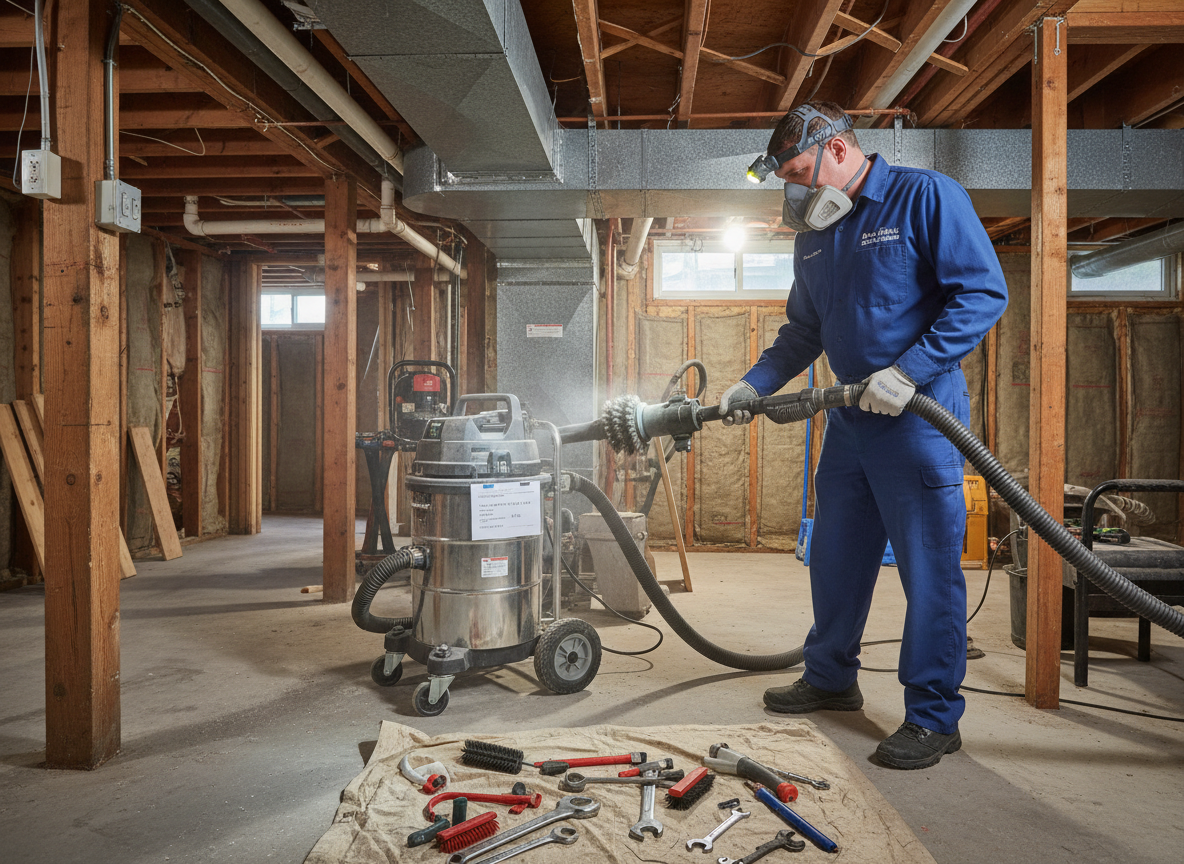
Parsippany-Troy Hills homes, many built between the 1960s and 1980s, often feature forced-air systems with long runs of sheet-metal ductwork that collect construction dust, insulation fibers and seasonal pollen. Winter heating cycles push this material through registers into living spaces while summer humidity encourages mold growth on interior surfaces. Mendova Works technicians use negative-air machines and rotary brushes sized for these older ducts to dislodge buildup without damaging seams or insulation.
Access points in split-level and colonial homes are frequently located in tight crawlspaces or finished basements where moisture from nearby Rockaway River tributaries can corrode metal joints. Technicians inspect for loose connections and collapsed flex duct before cleaning begins. In neighborhoods such as Lake Hiawatha and Mount Tabor, tree cover increases pollen load, so filters load faster and require more frequent attention than in open developments.
Homeowners sometimes attempt DIY vacuuming through registers, which pushes debris deeper into trunk lines and can dislodge insulation. Professional cleaning includes sealing all access panels afterward and documenting before-and-after airflow readings. Morris County properties near major roads also see higher soot accumulation from traffic, requiring extra passes with HEPA-filtered equipment.
Technician insight
In Parsippany-Troy Hills the thing that catches most people out with duct cleaning services near me is the amount of original construction debris still sitting in the trunk lines of 1970s colonials around Lake Parsippany. Those homes were never cleaned during the initial build and the flex runs sag over time, trapping material that standard vacuuming never reaches.
Collapsed Flex in Mount Tabor Split-Level
A homeowner noticed weak airflow from second-floor vents. Inspection revealed a crushed flex run under insulation in the attic. Technicians replaced the damaged section, cleaned the remaining metal ducts, and restored balanced airflow throughout the house.
How it works
- 1
System Inspection
Technicians enter through existing access points or create minimal openings in Parsippany-Troy Hills homes to map duct runs and note damage or moisture.
- 2
Negative Air Setup
A HEPA vacuum is connected to create containment so loosened debris moves only toward the collection unit rather than into living areas.
- 3
Mechanical Agitation
Rotary brushes and compressed air tools dislodge dust, pet hair and pollen from sheet metal and flex lines throughout the system.
- 4
Final Verification
Registers are cleaned, access panels sealed, and airflow tested before the crew leaves the property.
Pricing
Cost depends on number of runs, access difficulty and system age; upfront quotes provided after inspection.