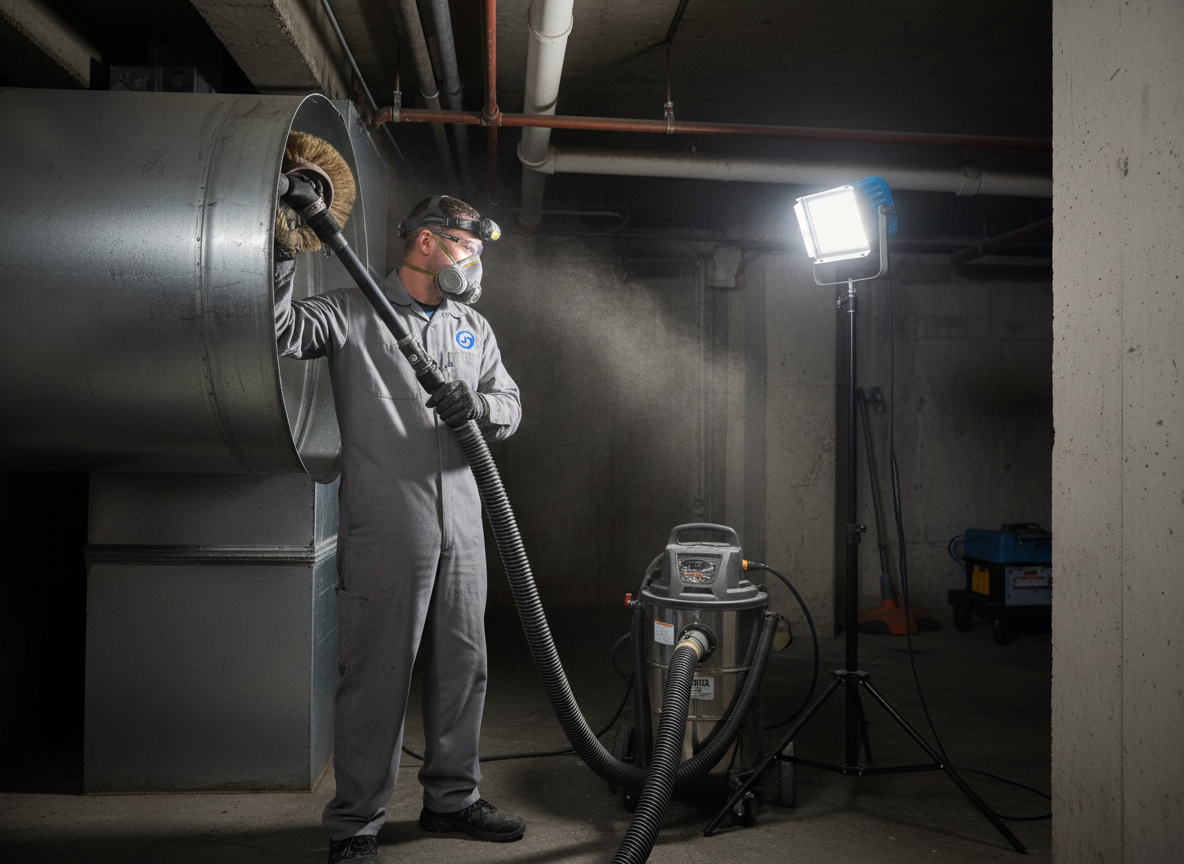
Homes throughout Parsippany-Troy Hills often feature duct systems installed decades ago that collect fine construction residue, pollen from surrounding wooded lots, and seasonal debris stirred by winter winds and summer humidity. Professional cleaning begins with a full inspection of supply and return runs, using brushes sized for the actual duct diameters found in split-level and ranch-style properties common here. Technicians seal registers and use negative-pressure equipment to pull loosened material away from living spaces rather than redistributing it. This approach prevents the re-entrainment of particles that occurs when portable units lack proper containment.
Moisture from basement slabs and crawl spaces common in the area can foster microbial growth inside flex ducts and metal trunks, especially after heavy spring rains. During cleaning, every accessible boot and elbow is opened so brushes reach the full length without damaging seams. Technicians also check for disconnected sections that allow unfiltered air to enter, a frequent issue in older additions around Lake Hiawatha and Lake Parsippany. Proper sealing at these points improves overall system efficiency and reduces the load on HVAC equipment during temperature swings typical of Morris County winters.
Final steps include a post-cleaning visual verification with a camera and replacement of any damaged access panels. Homeowners receive a written summary noting any repairs needed beyond cleaning, such as insulation gaps that allow attic dust to enter returns. This documentation helps residents plan future maintenance around the actual condition of their ductwork rather than generic schedules.
Technician insight
In Parsippany-Troy Hills, the thing that catches most people out with professional air duct cleaning is how many 1960s and 1970s homes still have original flex duct sections running through unconditioned attics and crawl spaces where temperature swings cause condensation and trap pollen year-round.
Return Duct Issue in Split-Level Home
Problem: Persistent dust on surfaces despite filter changes. What we found: Disconnected return boot allowing attic insulation to enter the system. What we did: Reconnected and sealed the boot, then cleaned the full trunk line. Outcome: Visible reduction in settled dust after one service cycle.
How it works
- 1
Initial Inspection
Technician examines all accessible ducts, registers, and the HVAC unit to map layout and identify problem areas specific to the home's age and construction.
- 2
Containment Setup
Registers are sealed and negative-pressure equipment is connected at the main trunk to capture debris without affecting indoor air.
- 3
Mechanical Cleaning
Rotary brushes and air whips loosen accumulated material throughout straight runs and bends, with debris pulled into the collection system.
- 4
Sanitizing and Verification
Approved sanitizers are applied where moisture evidence appears, followed by camera inspection to confirm ducts are clear before restoring airflow.
Pricing
Pricing varies by number of runs, home size, and condition of the ductwork. Upfront quotes provided after inspection.